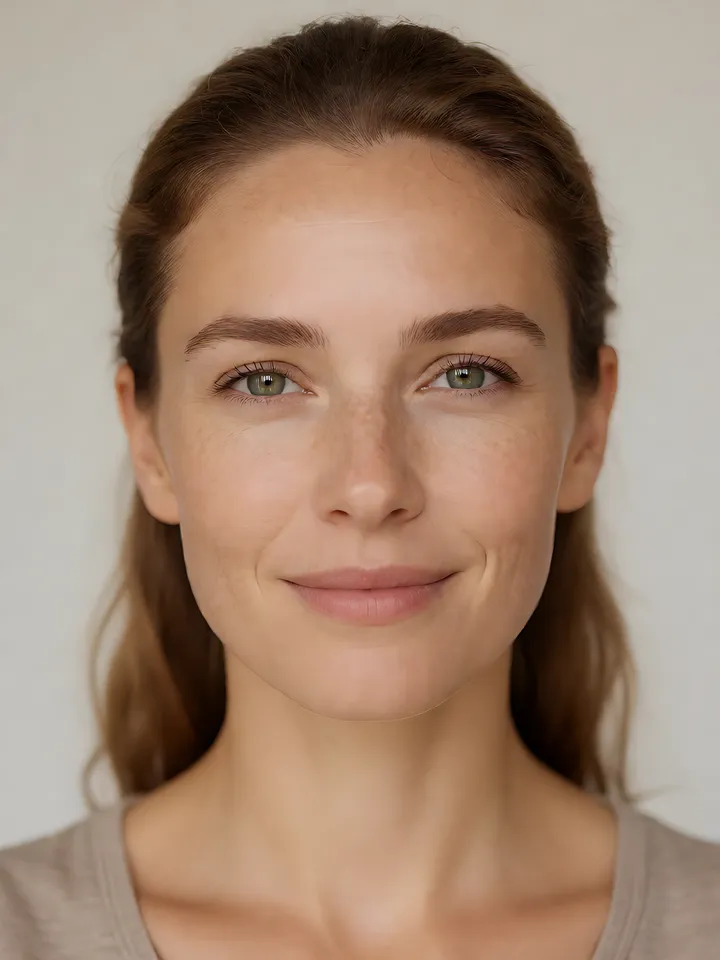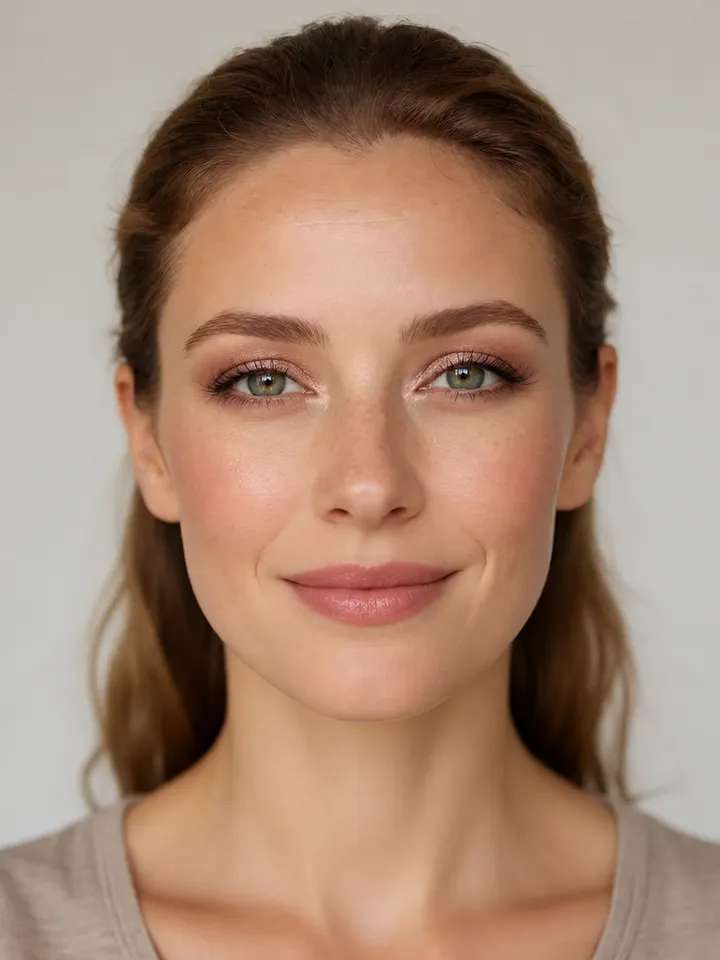

Business
The business look is polished daytime makeup: light, even coverage, neutral taupe or soft brown eyes, a thin line at the lashes, groomed brows, soft rose blush and a muted rose lip.
How to do Business makeupColor correctors cancel discoloration with the opposite color on the color wheel: green tones down redness, peach or orange counteracts blue-purple dark circles and dark spots, and a skin-matched concealer then blends everything in. Use correctors only where needed and in thin layers.
Opposite colors neutralize each other. A thin layer of the opposite color under your concealer or foundation reduces the discoloration, so you need less coverage on top. Correctors are always followed by a skin-colored product; they are not meant to show.
Use a green-tinted primer or green corrector only on the red areas, such as around the nose or on the cheeks. Tap on a very thin layer and let it set, then apply foundation. For mild redness, a yellow-toned concealer may be enough on its own.
Blue or purple shadows under the eyes are counteracted by peach or salmon on light to medium skin, and by orange or red-orange on deeper skin. Pat the corrector into the darkest area only, cover with a skin-matched concealer and set with a little powder to stop creasing.
Dab a concealer that matches your skin exactly onto the blemish with a small brush, pat the edges into the skin and set it with powder. A touch of green underneath helps with a very red spot. Avoid stacking thick layers, which can make the spot more noticeable. Clean your tools often, and talk to a dermatologist about persistent or painful acne; makeup only covers it.
For hyperpigmentation on medium to deep skin, an orange or peach corrector under the dark areas reduces the gray cast that concealer alone can leave. On light skin, a peach corrector works on brown spots. Then use a light-coverage foundation overall and spot-conceal what still shows.
Color correcting does not apply to texture. Instead, press a smoothing or pore-filling primer into the area, keep foundation thin, and powder only where you get shiny. Keep shimmer and glitter away from textured areas, because shine emphasizes texture.
The quiz asks which of these concerns you want makeup to cover or smooth. Your current result tips are based on your eye color, hair color and skin tone; for shade ideas by depth, see the skin tone guide.
Green. Apply a thin layer only on the red areas, let it set, then apply foundation or concealer on top.
Peach or salmon on light to medium skin, and orange or red-orange on deeper skin. Cover it with a concealer that matches your skin.
Not always. For mild discoloration a well-matched concealer is enough. Correctors help when concealer alone leaves a gray or red cast.
The business look is polished daytime makeup: light, even coverage, neutral taupe or soft brown eyes, a thin line at the lashes, groomed brows, soft rose blush and a muted rose lip.
How to do Business makeupSoft glam is a polished but gentle look: an even, luminous base, warm-brown and rose eyeshadow blended until no edge shows, fluttery lashes, diffused rosy blush and a satin pink-nude lip.
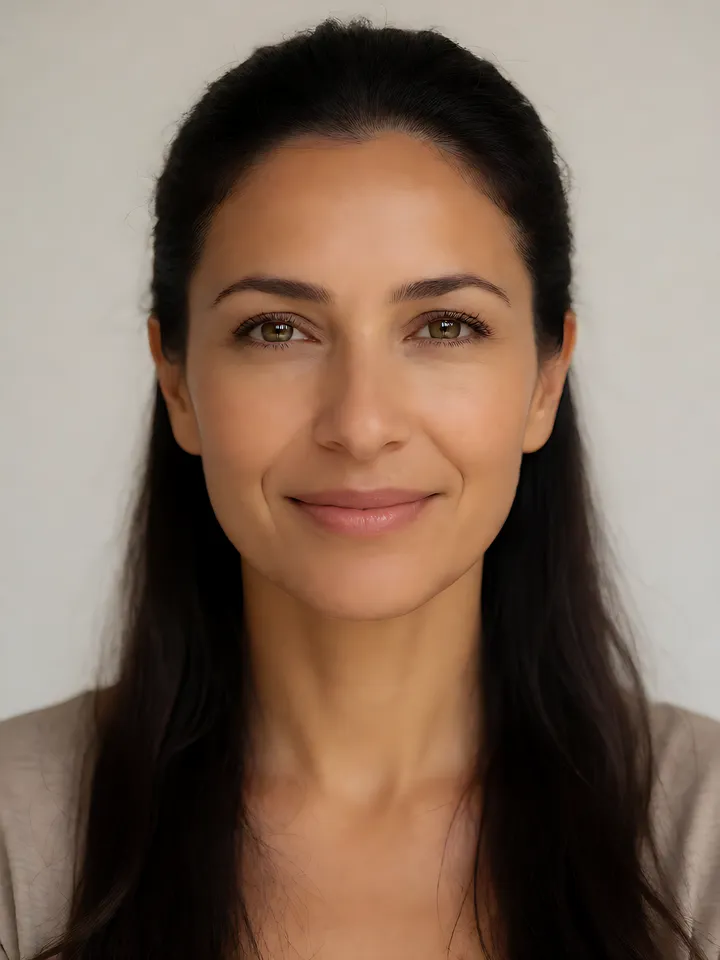
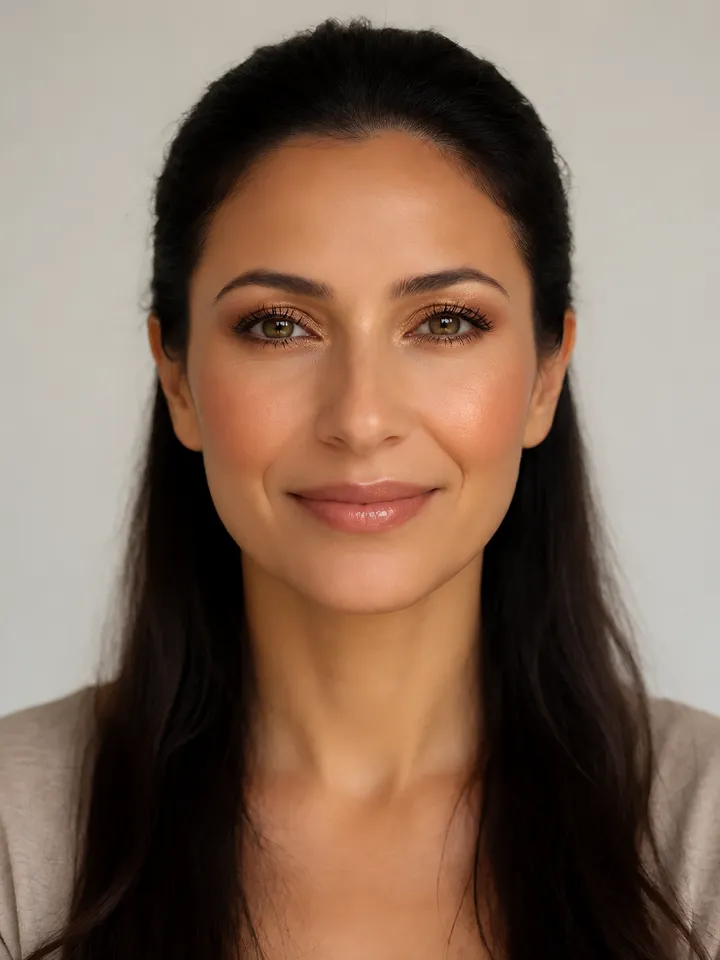
How to do Soft Glam makeupThe bronze goddess look gives the face warmth as if from the sun: bronzer on the high points of the face, warm bronze eyeshadow with a deeper outer corner, golden highlight, peach blush and a glossy warm-nude lip.
How to do Bronze Goddess makeupAll faces shown are AI-generated fictional models, not real people.