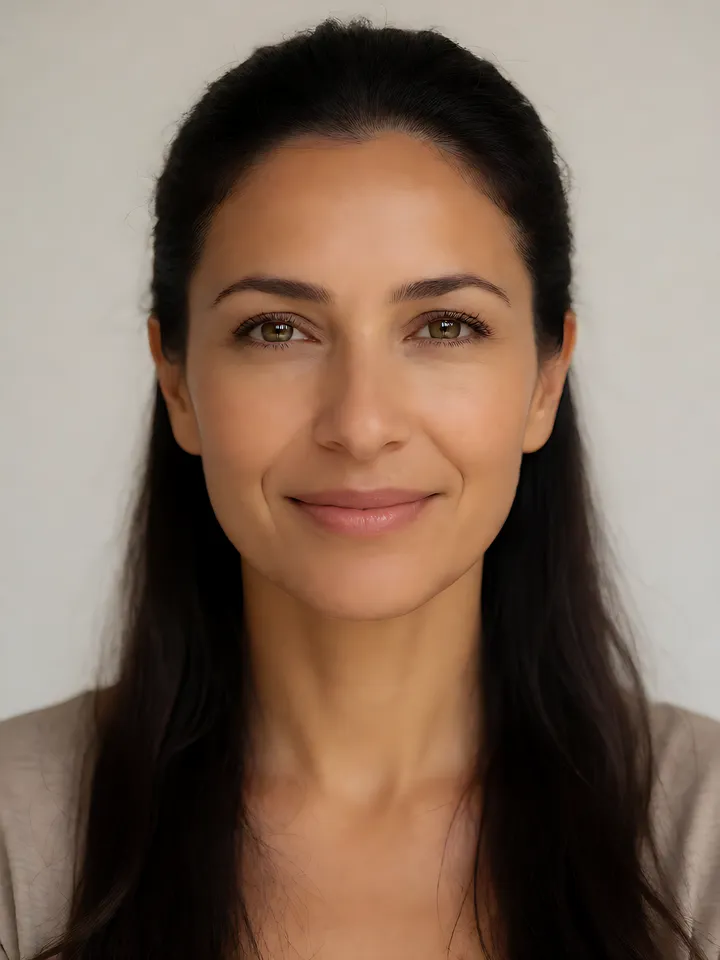
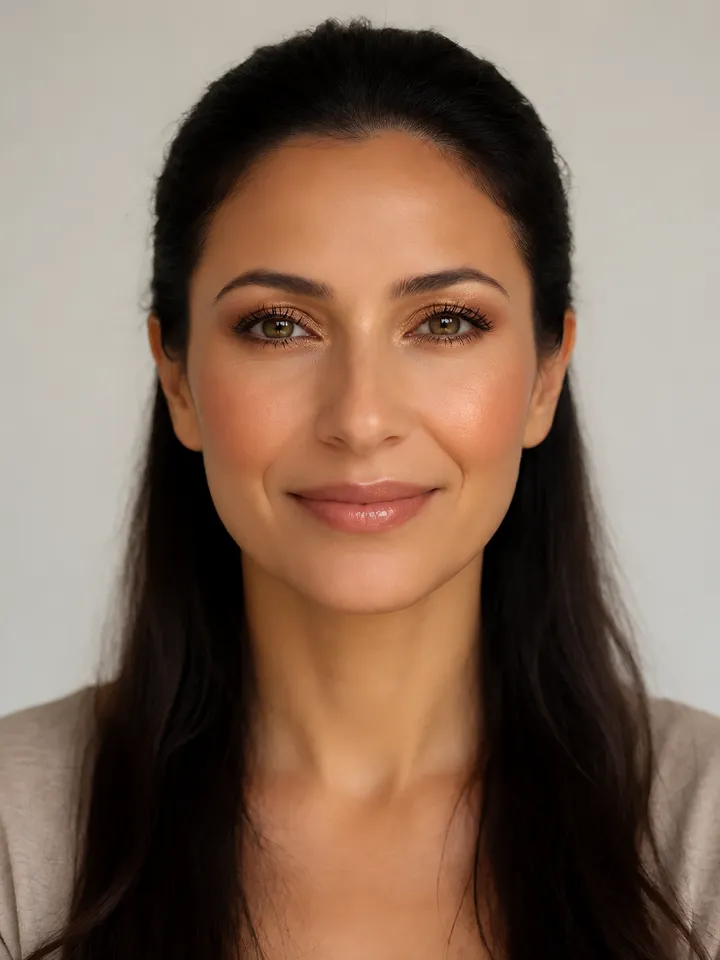
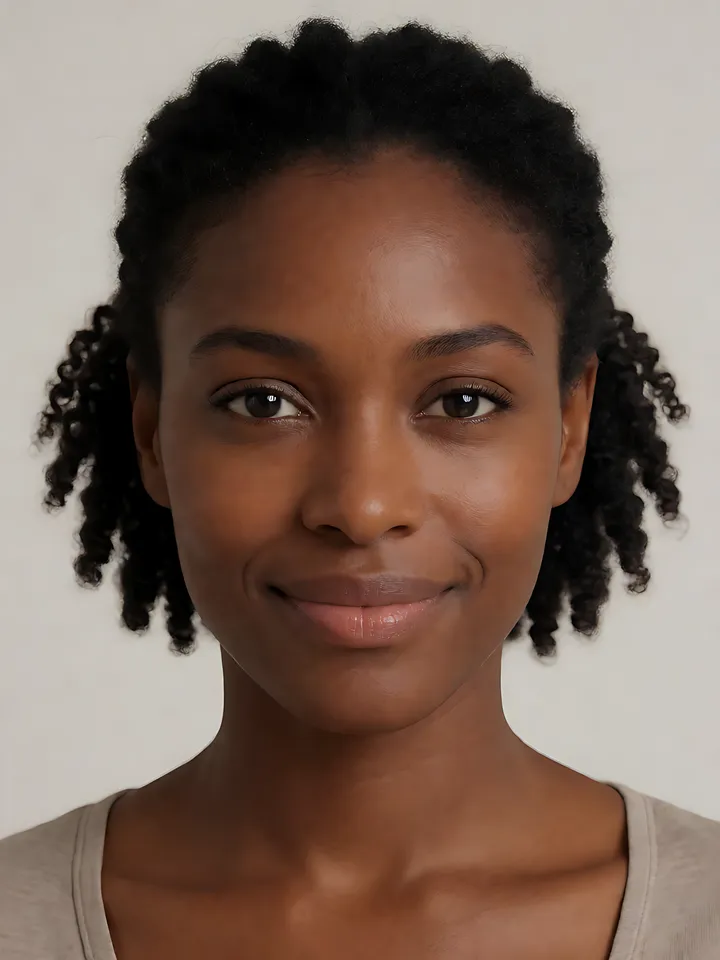
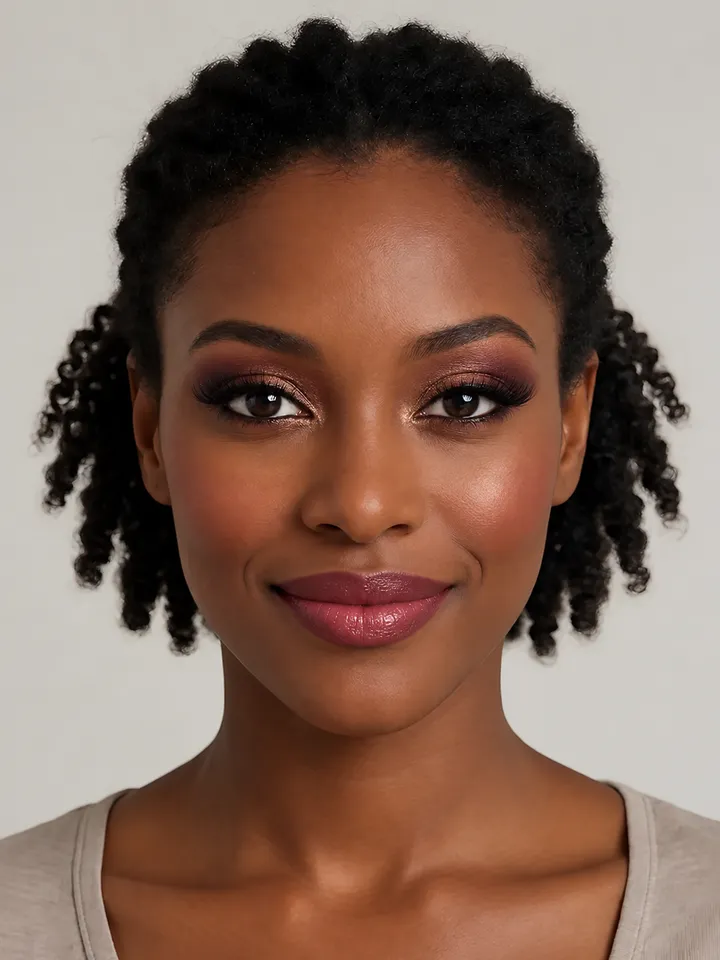
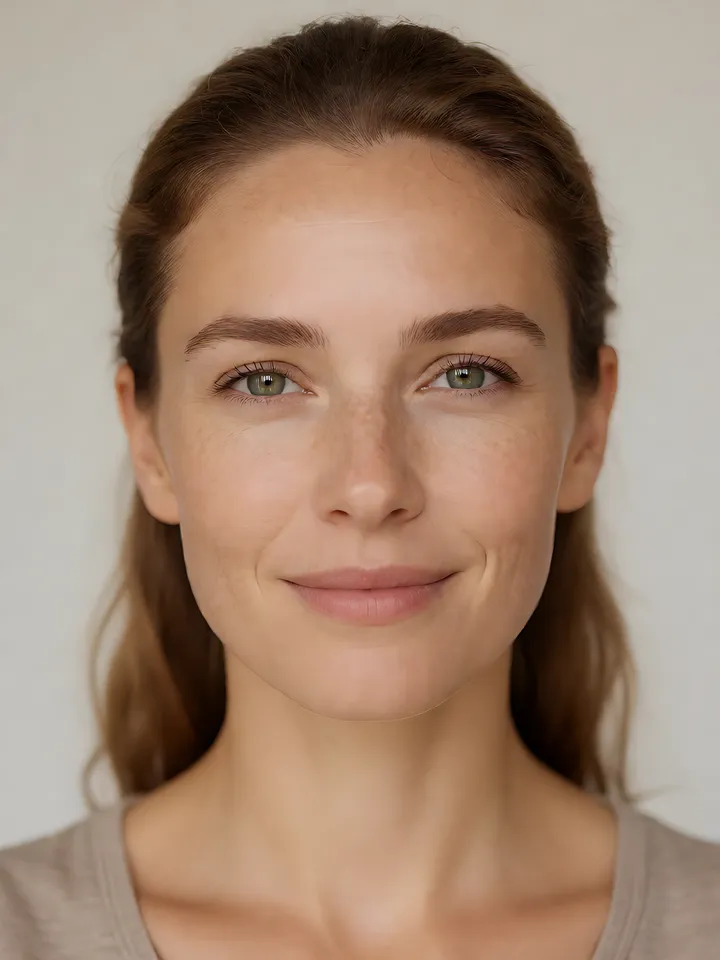
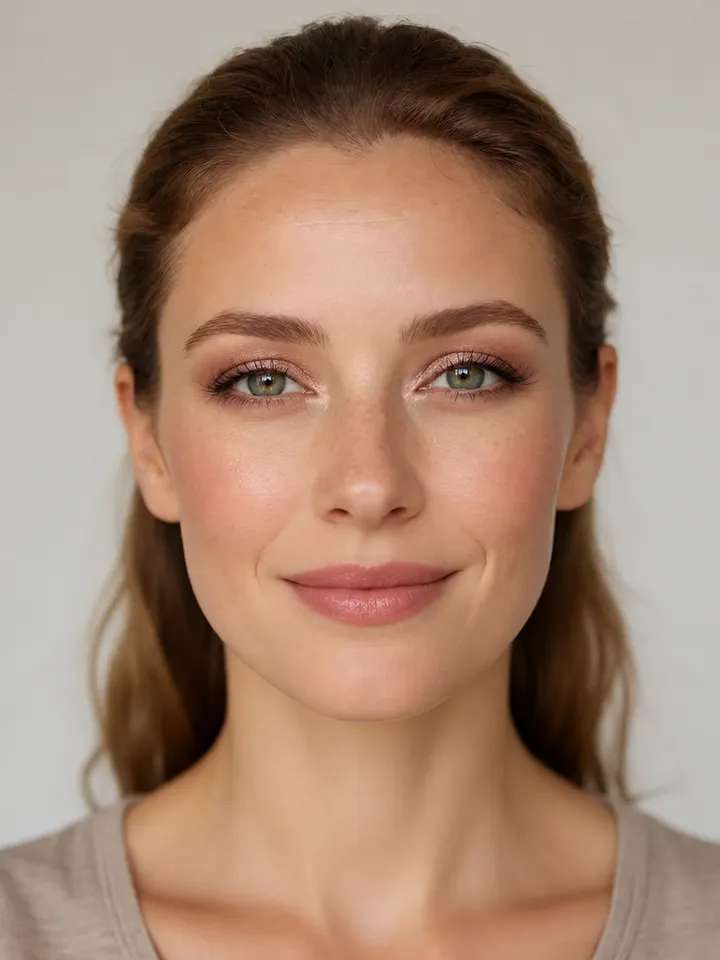
On dark and deep skin, makeup looks best when the base matches both depth and undertone, color is pigmented enough to show, and nothing leaves a gray or ashy cast. Match foundation on the jaw in daylight, use an orange or red-orange corrector under concealer for darker areas, choose tinted rather than white powder, and pick saturated blush, lip and eye shades such as berry, brick, plum, gold and bronze.
Match depth and undertone
Dark and deep skin covers a wide range of depths and undertones, from golden and red to neutral, olive and cool. Swatch two or three foundation shades on the jaw, wait about ten minutes and check them in daylight; the right one disappears into your skin. Many faces are a little lighter in the center and deeper around the edges, so some people blend two shades. The foundation guide covers application.
Avoid an ashy or gray cast
Correct before concealing. An orange or red-orange corrector under concealer counteracts darker areas, such as under the eyes, so concealer does not look gray. See the color correcting guide.
Tinted powder. Translucent or white powders can leave a white cast, especially in flash photos. Choose a tinted or skin-matched powder and press only where you get shiny.
Concealer close to your skin. A concealer much lighter than your skin reads as gray; stay within a shade of your foundation.
Color that shows
Blush: berry, brick, plum and deep coral show up; sheer pastels may barely show. Pigmented cream blush blends well.
Highlighter: gold, bronze and copper tones melt into the skin; very pale or silvery highlighters can look chalky.
Eyes: metallic gold, bronze and copper, deep plum, navy and emerald all stay vivid; matte browns add definition.
Lips: any color works when depth and undertone are right, including bright and deep reds, berry, plum and warm nudes with caramel or brown in them.
These are starting points, not rules. The skin tone guide and the lipstick guide go into shade families in more detail.
How this connects to Lookslate
The Lookslate quiz asks your skin tone depth, including Dark and Deep, and your result tips suggest shade families for it. Lookslate does not match a foundation shade. Bronze Goddess uses bronze eyeshadow and warm bronzer, and Evening Glam a rich rose lip; deepen their shades to suit your skin.
Frequently asked questions
How do I stop my makeup looking ashy on dark skin?
Match foundation and concealer closely to your skin, use an orange or red-orange corrector under concealer on darker areas, and choose a tinted rather than white or translucent powder.
What blush colors suit dark skin?
Pigmented shades such as berry, brick, plum and deep coral show up well; very sheer pastels may barely show.
What highlighter works on deep skin?
Gold, bronze and copper highlighters blend into deep skin; very pale or silvery shades can look chalky.
Why does my foundation look gray?
Usually the shade is too light or the undertone is wrong, or a white powder sits on top. Re-check the shade on your jaw in daylight and switch to a tinted powder.
The bronze goddess look gives the face warmth as if from the sun: bronzer on the high points of the face, warm bronze eyeshadow with a deeper outer corner, golden highlight, peach blush and a glossy warm-nude lip.
Evening glam is a fuller, more defined look built for low, warm evening light and flash photography: shimmer-lit eyes with a deeper outer corner, liner and sculpted lashes, highlighted cheekbones and a rich rose lip.
Soft glam is a polished but gentle look: an even, luminous base, warm-brown and rose eyeshadow blended until no edge shows, fluttery lashes, diffused rosy blush and a satin pink-nude lip.
All faces shown are AI-generated fictional models, not real people.
Related guides
Makeup shades for your skin toneBlush, lip and eyeshadow shade families for fair, light, medium, tan, dark and deep skin, plus how to check your undertone and match foundation.
Color correcting for redness, dark circles and moreHow to use color correctors and concealer for redness, dark circles, blemishes, uneven skin tone and visible pores, and the color wheel logic behind them.
Makeup for olive skinMakeup for olive skin: how to tell if you are olive, foundation shades that are not too pink or orange, and blush, bronzer, eye and lip colors that flatter.