Makeup lasts longest when the skin is prepared and every layer is thin: moisturize and let it absorb, use a primer suited to your skin, apply foundation in thin layers, set only where you get shiny or creased, prime the lids, choose long-wear liner and lip formulas, finish with setting spray, and blot instead of adding powder during the day.
Why makeup fades
Most makeup breaks down for a few reasons: oil from the skin dissolves it, dry skin flakes underneath it, it settles into lines where the skin moves, or there is simply too much of it, so layers slide. Each step below deals with one of these.
Step by step
Prep. Cleanse, moisturize and give it a few minutes to absorb. In daytime, apply sunscreen and let it set before foundation; makeup slides on a wet layer.
Primer for your skin. A mattifying primer on oily areas, a hydrating one on dry areas. You can use both on different parts of the face.
Thin base. Apply foundation in thin layers and press it in with a damp sponge. Two thin layers last longer than one thick one.
Set strategically. Press powder onto the T-zone and any area that creases, such as under the eyes, with a light hand.
Prime the lids. An eyeshadow primer stops shadow from creasing and fading; set it with a skin-toned powder shadow.
Long-wear eyes. Waterproof or smudge-proof liner and mascara hold up best, especially on oily lids.
Cheeks in layers. A cream blush set with a little powder blush in the same shade lasts much longer than either alone.
Lips. Line and fill the lips with a liner, apply lipstick, blot and apply a second layer.
Setting spray. A light mist at the end melts the layers together and helps them last.
By skin type
Oily: mattifying primer on the T-zone, an oil-free or long-wear foundation, and blotting papers during the day.
Dry: hydrating primer, a satin or radiant foundation and minimal powder; dry skin breaks makeup down by flaking, not by oil.
Combination: treat the zones separately: mattify the T-zone, hydrate the cheeks.
Mature: keep layers thin and skip powder under the eyes; see the mature skin guide.
Touch-ups during the day
Blot shine with blotting paper instead of adding more powder, which builds up and looks heavy. Carry your lip color and reapply after eating. A dab of concealer on a fingertip fixes any spot where the base wore through.
How this connects to Lookslate
Business is built for a long day, and Evening Glam for a long night: both use thin layers and set only where you get shiny. The quiz asks which skin concerns you want makeup to cover; for redness, dark circles and visible pores, see the color correcting guide.
Frequently asked questions
How do I make my makeup last all day?
Moisturize and prime, apply foundation in thin layers, set only where you get shiny or creased, prime the eyelids, use long-wear liner, mascara and lip products, finish with setting spray and blot during the day.
Does setting spray really help?
It helps the layers blend and stay together, especially over powder. It works best on top of a thin, well-set base, not as a fix for heavy makeup.
Why does my foundation separate on my nose?
Usually oil or too much product. Use a mattifying primer there, apply less foundation, press a little powder on top and blot during the day.
How do I keep eyeshadow from creasing?
Apply an eyeshadow primer, set it with a skin-toned powder shadow, then apply your eyeshadow in thin layers.
The business look is polished daytime makeup: light, even coverage, neutral taupe or soft brown eyes, a thin line at the lashes, groomed brows, soft rose blush and a muted rose lip.
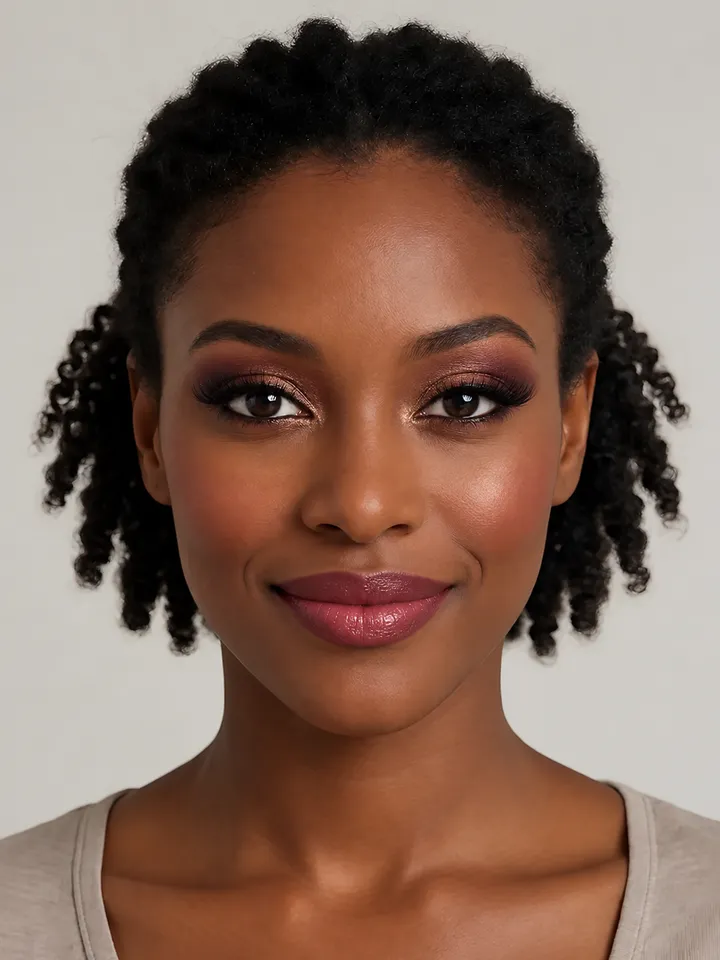
Evening glam is a fuller, more defined look built for low, warm evening light and flash photography: shimmer-lit eyes with a deeper outer corner, liner and sculpted lashes, highlighted cheekbones and a rich rose lip.
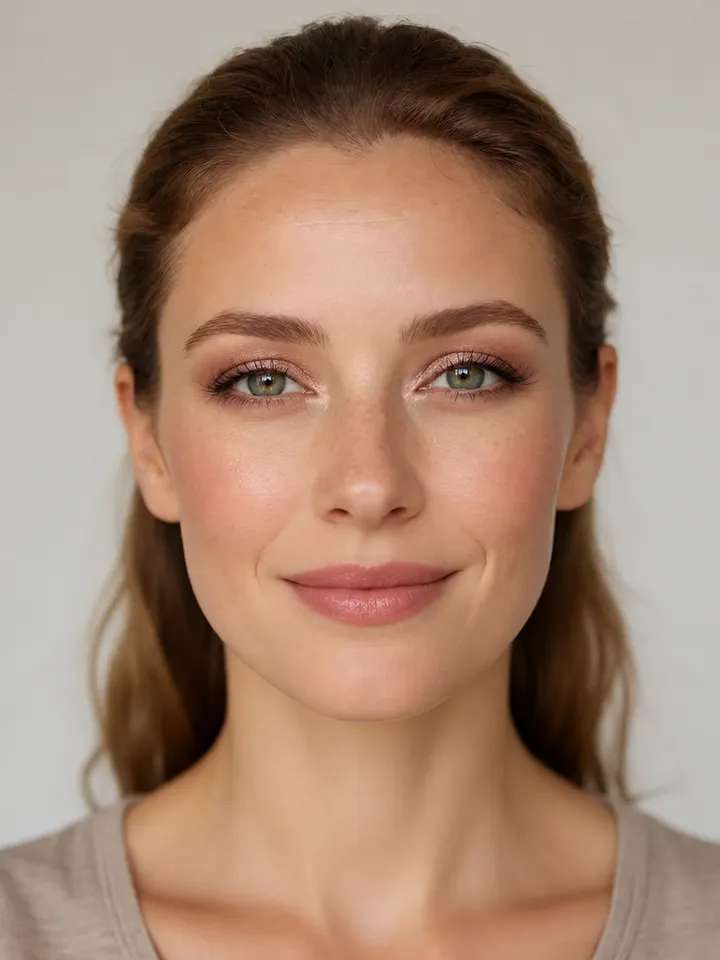
Soft glam is a polished but gentle look: an even, luminous base, warm-brown and rose eyeshadow blended until no edge shows, fluttery lashes, diffused rosy blush and a satin pink-nude lip.
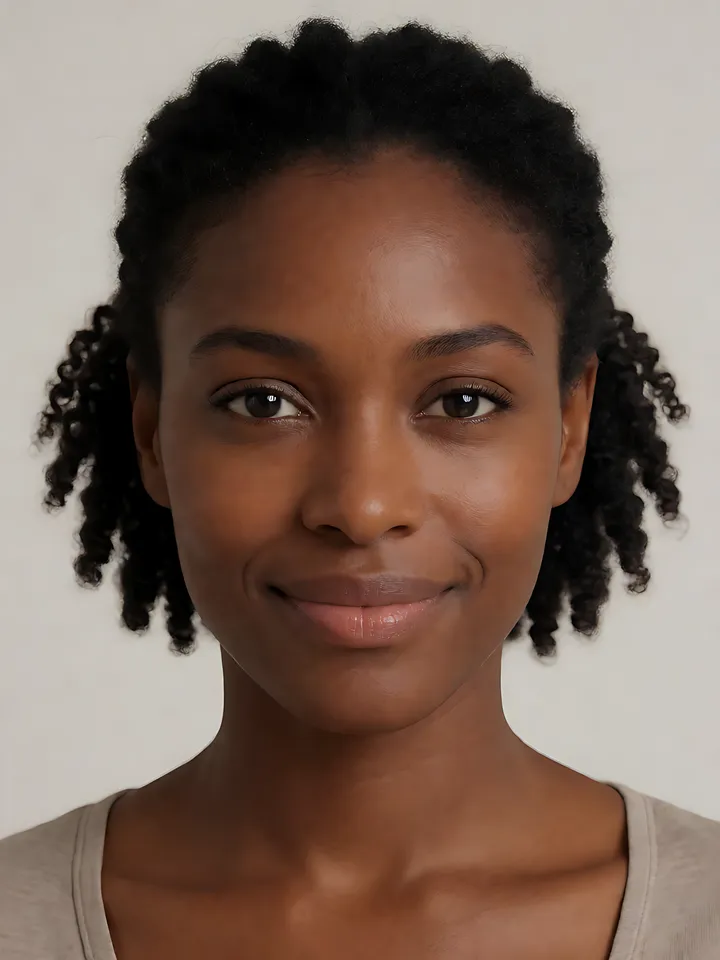
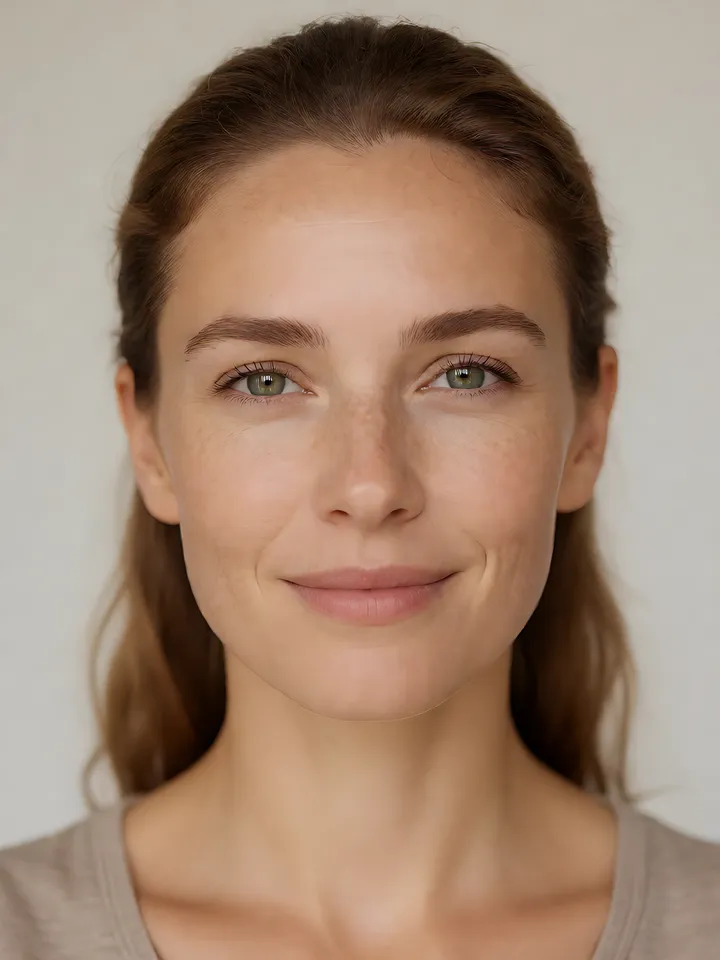
All faces shown are AI-generated fictional models, not real people.
Related guides
A simple makeup routine for beginnersA simple beginner makeup routine in the right order, from skin prep and base to brows, mascara, blush and lips, with a starter kit and key techniques.
How to apply foundationHow to apply foundation: find your shade on your jaw, choose a formula for your skin type, apply thin layers from the center out, blend the edges and set.
Color correcting for redness, dark circles and moreHow to use color correctors and concealer for redness, dark circles, blemishes, uneven skin tone and visible pores, and the color wheel logic behind them.
Makeup for photos and video callsMakeup for photos and video calls: what the camera changes, more definition and less shine, avoiding white cast in flash photos, and testing first.